How Tuyên Quang’s Casino Image Is Made on Screen
See how screen portrayals frame casino culture in Tuyên Quang, and separate a scene’s visual claims from evidence about local places and public life.
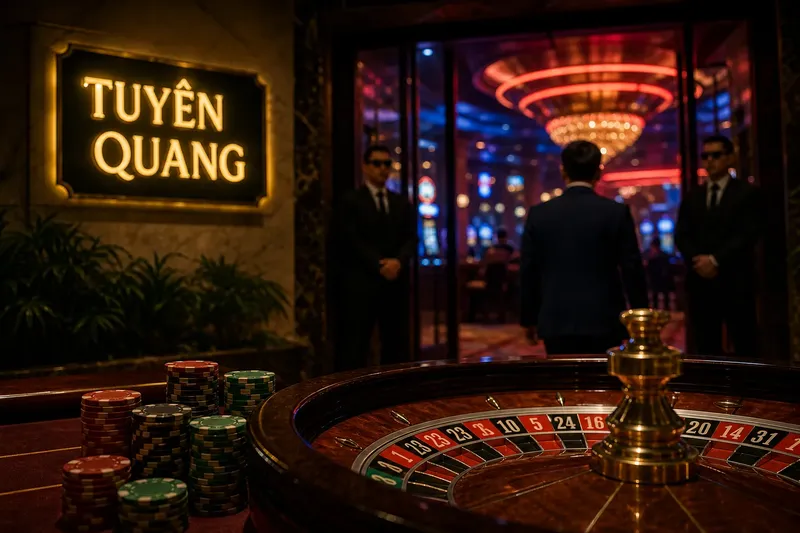
A sign marked “Tuyên Quang” beside a roulette wheel can make a screen scene look locally grounded, but the pairing supplies atmosphere, not local knowledge. Casino culture in Tuyên Quang is worth discussing through the choices that shape this image: what a scene shows, what it implies, and whose account of public life is missing.
Place names and images
Screen portrayals construct a casino setting from selected details. A gaming table may establish the activity; formal dress may suggest exclusivity; a guarded entrance may create tension. Add a place name and the scene invites viewers to connect those details to a real location. That invitation is a storytelling device, not evidence that the place is represented accurately.
This distinction matters especially when Tuyên Quang appears in a story built around familiar casino imagery. The scene may use the province as a backdrop, a plot location, or a source of local color. Those are different narrative choices, and none alone explains how residents discuss a venue or what role a particular place has in public life.
Record the place name separately from the scene’s visual claims.
What the scene frames
Framing determines which details viewers can use. A tight shot of chips and a player’s hand makes the game legible while excluding the room’s surroundings. A wide shot might reveal entrances, signs, other visitors, or staff. Sound adds another layer: tense music can make an ordinary gesture seem dangerous, while a quiet room can suggest control or secrecy.
None of these choices is neutral evidence about a real venue. They are choices about the scene. A precise description separates the visible detail from the interpretation: “The camera shows a guarded doorway” is observable; “the venue is secretive” is an inference that needs support beyond the image.
Note what the frame excludes as carefully as what it includes.
Public accounts in context
Different accounts answer different questions. A venue’s own material describes how it presents itself. A local news report addresses the event or issue it covers. A public notice is limited to its stated purpose. A film or television scene offers a designed portrayal. Comparing them is useful only after identifying what each source actually claims.
For a Tuyên Quang-focused discussion, keep the subject narrow. If the question concerns a specific place, seek accounts connected to that place and the question at hand; do not let a fictional scene stand in for residents’ views or local reporting. If no relevant local account is available, state that limit rather than filling it with familiar imagery.
Use a simple record with three fields:
- Observation: Write down the visible sign, object, sound, or action. If it is directly on screen, describe it; if it comes only from a caption or narration, identify that source instead.
- Interpretation: Record the mood or meaning the scene appears to encourage. If the reading depends on music or editing, name that cue; otherwise, avoid attributing the effect to the place itself.
- Source claim: Copy or accurately paraphrase what a cited account says. If the source does not address the claim, mark it unsupported; otherwise, keep the claim within the source’s stated scope.
- Place connection: Check whether the account identifies a real location in Tuyên Quang. If it does, describe that connection precisely; if not, call it a fictional or unspecified setting.
- Public-life relevance: Check whether the source discusses residents, local institutions, or a public issue. If it does, report only that material; if not, do not infer local opinion from a character’s behavior.
- Unanswered question: List what the available material leaves unresolved. If a reliable source can address it, seek that source; if not, retain the question rather than presenting a guess as fact.
Reading a Tuyên Quang scene?
Does a place name prove the scene is local?
No. A label can locate a story within its own fiction, but it does not establish that the setting reflects an actual venue or local experience. Look for independent, place-specific material before making a claim about Tuyên Quang.
What can a casino scene establish?
It can establish what the production chose to show and how it framed the subject. It cannot, by itself, establish how a real venue is used or discussed by nearby residents.
How should conflicting accounts be handled?
First compare their subject, purpose, and date rather than treating them as interchangeable. If they address different questions, report that difference; if they make incompatible claims about the same matter, attribute each claim and leave the conflict visible.
Can atmosphere count as local context?
Atmosphere describes a portrayal, not a community. A landscape, accent, or local name may contribute to the scene’s sense of place, but local context requires information tied to the actual place and the question being discussed.
A worked reading
Imagine a fictional scene that names Tuyên Quang, shows a neon casino sign, cuts to a roulette wheel, and plays low, tense music as a visitor enters. The starting material is only those visible and audible elements; no real venue or local account is identified.
First, record the sign as the scene’s place reference, not proof of a real location. Next, note the wheel as a casino cue and the music as a source of tension. Then describe the implied claim cautiously: the editing presents the visit as uneasy. Finally, check for a source tied to an actual place or public account; none is provided in this imagined scene. The resulting judgment is that the scene constructs a tense casino image associated with Tuyên Quang, while its connection to local public life remains unestablished.
That answer is narrower than the scene’s atmosphere, and more useful for discussing casino culture in Tuyên Quang. A screen image can show how a place is imagined; claims about the place itself need sources that actually address it.